
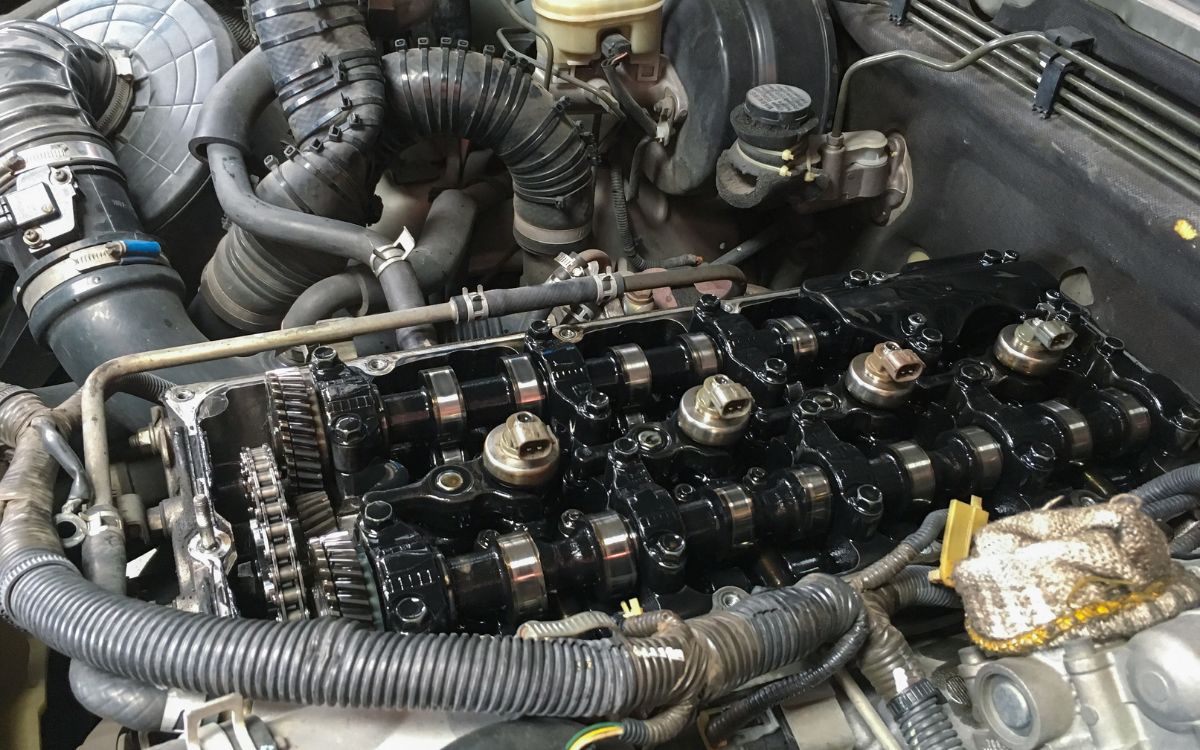
Diesel engines have real upsides. They deliver strong fuel efficiency, long service life, and the torque you need for towing, fast starts, and pulling grades. They also need maintenance, just like gasoline engines.
Proper diesel truck maintenance is not just about keeping your engine running for years. With regular care, diesel owners get a truck that is safer, performs better, and gets better fuel mileage. So what does diesel maintenance actually involve? How often does each step need to be done, and why does it matter?
The Importance of Regular Maintenance in Diesels
First, here is why diesel engine maintenance is so important. Like gasoline engines, diesel engines need scheduled service. The benefits of proper maintenance include:
- Engine Life: Maintenance addresses common issues like air filter buildup, dirty oil thickening, weak cooling, and other problems that show up over time. Diesel engines can outlast their gasoline counterparts when maintained, but maintenance is part of the deal.
- Fuel Economy: Diesels are loved for fuel mileage. Over time oil collects contaminants, air filters clog, and fuel filters fill up. Regular service prevents these issues and keeps your engine running efficiently.
- Safety and Performance: A well-maintained engine is a safer engine. Routine service helps you find and fix problems sooner, which keeps your truck safer on every haul.
Severity Classification: Normal vs. Severe Duty in DFW
Before you read the schedule, know which column applies to your truck. Service intervals depend on how hard the truck works.
- Normal duty: Highway commuting, light hauling under 7,500 lb, mild climates, full warm-up cycles. Use the longer end of the interval ranges.
- Severe duty: Stop-and-go DFW city driving, towing 7,500 to 14,000 lb, extended idling, dusty job sites, fleet rotation. Use the shorter end of the ranges. Most DFW operations qualify as severe duty because of summer heat, construction dust, and traffic.
- Extreme duty: Towing over 14,000 lb, sustained idling more than three hours daily, off-road and oilfield work, year-round 100°F+ exposure. Cut intervals by another 25% from severe-duty numbers.
Owner’s manuals give a normal-duty schedule by default. If your truck operates in severe or extreme conditions, follow the OEM’s accelerated schedule. Cummins, Ford Power Stroke, and GM Duramax all publish severe-duty tables in their service manuals.
Common Diesel Maintenance Considerations
Here is what diesel maintenance actually covers. The table below gives you the schedule at a glance. The notes that follow add the watch-outs that drivers in DFW miss most often.
| Component | Maintenance Action | Interval (Miles / Hours) |
| Engine Oil & Oil Filter (light-duty pickup) | Change | 5,000–7,500 mi normal; 3,000–5,000 mi severe duty |
| Engine Oil & Oil Filter (heavy-duty Class 7-8) | Change | 25,000–50,000 mi or 500 hr (synthetic, OEM-spec) |
| Fuel Filter (Primary) | Replace | 15,000–30,000 mi or annually |
| Water Separator | Drain water | Weekly (daily for hard duty) |
| Air Filter | Clean or replace | 15,000–30,000 mi or per restriction gauge |
| Coolant | Flush and refill | 30,000–100,000 mi or per acidity test, every 2–5 years |
| Coolant System | Inspect hoses, cap, level | Every oil change |
| DPF (Diesel Particulate Filter) | Forced regen or professional cleaning (ash removal) | EPA: every 6 mo or 1,000 hr; full clean 100,000–200,000 mi |
| EGR Valve | Inspect and clean | 50,000–75,000 mi |
| SCR System / DEF | Refill DEF, inspect SCR | DEF every 5,000–7,000 mi, SCR per PM |
| Drive Belts | Inspect and replace | 60,000–90,000 mi |
| Glow Plugs | Test resistance, replace if weak | Annually (before winter); replace at 100,000 mi |
| Turbocharger | Inspect boost, shaft play, oil feed line | Every 30,000 mi |
| Injectors | Balance-rate test, clean or replace | 100,000 mi or on symptom |
| Batteries (dual) | Load test, clean terminals, replace as a pair | Every 6 mo test; replace 4–5 years |
| Tires | Rotate, check pressure and tread | 5,000–7,500 mi |
| Brakes | Pad inspection; brake fluid flush | 15,000 mi pads; 30,000 mi fluid |
| Transmission Fluid & Filter | Drain and refill | 30,000–60,000 mi |
| Valve Lash | Adjust per OEM spec | Cummins ISB: 150,000 mi. Power Stroke 6.7L: not required. Duramax L5P: 150,000 mi. |
Note: Intervals are general guidelines. Your owner’s manual is the authoritative source for your specific engine. Heavy-duty operation, dusty job sites, hot DFW summers, and extended idle time all shorten the right interval.
Cleaning and Replacing Fuel Filters
Diesel fuel can pick up contamination at the pump or in storage. Diesel engines run a fuel filter to trap harmful particles before they reach the injectors. Replace the filter on the schedule above and check the water separator far more often. When in doubt, take your truck to an experienced diesel mechanic.
Changing the Oil Filter and Oil
Diesel engines need lubrication, and like any engine, the oil thickens and dirties over time. Light-duty diesel pickups (Power Stroke, Cummins 6.7L, Duramax) usually run 5,000 to 7,500 miles between changes on normal duty. Heavy-duty Class 7-8 trucks running synthetic oil per OEM spec can stretch to 25,000 miles or more.
Hot DFW summers and stop-and-go city driving both shorten the right interval. Watch the oil life monitor if your truck has one, and pull samples for analysis if you run extended drains.
Checking the Coolant System
Engine coolant controls heat and keeps the engine from cooking itself. Coolant lines, hoses, and the radiator cap all wear over time. A small leak in your engine bay turns into corrosion and major damage fast. Inspect the coolant system at every oil change. Test coolant acidity (pH) every 30,000 miles and flush per the table.
Cleaning or Replacing the Air Filter
Air is half the combustion equation. The air filter blocks dust, debris, and pollen from getting into the engine. In a region like DFW with construction, dirt roads, and seasonal pollen, air filters clog faster than the manual suggests. Watch the restriction gauge if your truck has one and swap the filter when it goes red.
Exhaust System Maintenance: DPF, EGR, SCR
Diesel exhaust systems are complex. Many trucks run a Diesel Particulate Filter (DPF), which can self-clean through a process called regeneration. Regen burns off soot, but the DPF also collects ash that can only be removed by professional cleaning. EPA guidance and most OEMs call for ash cleaning every 6 months or 1,000 engine hours, with a full DPF clean every 100,000 to 200,000 miles. Skip it and you face a $3,000 to $10,000 DPF replacement.
If your truck uses passive regen, you may need to drive at highway speed for a set time to complete the cycle. Short trips around DFW often interrupt regen, so plan a longer run when the DPF light comes on.
The Exhaust Gas Recirculation (EGR) valve and Selective Catalytic Reduction (SCR) system also need attention. Both cut harmful pollutants like NOx. Have a qualified diesel engine repair tech inspect these on every PM service.
Glow Plug Inspection: Winter Prep for North Texas
Glow plugs heat the combustion chamber for cold starts. DFW winters bring sub-30°F nights several times a year, and weak glow plugs make starting brutal. Test glow plug resistance once a year before winter. Replace a full set at 100,000 miles even if they still test okay. A failed glow plug can damage the cylinder head if a tip breaks off.
Turbocharger Health Check
The turbo is one of the most expensive parts on a diesel. Inspect boost pressure with a scan tool every 30,000 miles. Check shaft play by hand at major service. Look for oil residue on the intercooler hose, which signals a failing seal. A turbo failure caught at the bearing stage is a $2,000 fix. A full turbo failure that grenades into the intake is a $5,000 to $15,000 disaster.
Battery and Electrical System
Diesels run dual batteries to crank a high-compression engine. DFW summer heat kills batteries faster than the cold does. Load test both batteries every 6 months. Clean terminals quarterly. Replace as a matched pair, not one at a time, even if only one tests bad.
Signs Your Diesel Needs Immediate Service
Don’t wait for the next scheduled PM if you see any of these:
- Black, blue, or white smoke from the exhaust
- Hard cold starts or extended cranking
- Check engine, DPF, or DEF warning lights
- Frequent forced regens (more than once a week on a daily driver)
- Coolant loss with no visible leak
- Oil level rising between changes (fuel dilution)
- Boost pressure lag or surging under load
- Fluid puddles under the truck
- Unusual knocking, ticking, or whistling
- Loss of power or fuel economy drop
- Brake pedal travel changes or pulling under braking
Catch any of these early and you usually save a major repair. Wait, and the bill multiplies.

Frequently Asked Questions
How often should a diesel engine be serviced?
Light-duty diesel pickups need oil changes every 5,000 to 7,500 miles, with shorter intervals in severe-duty conditions. Heavy-duty Class 7-8 trucks on synthetic oil can stretch to 25,000 to 50,000 miles. Always follow your owner’s manual.
How often should a DPF be cleaned?
EPA and most OEMs recommend ash cleaning every 6 months or 1,000 engine hours. Full DPF cleaning runs every 100,000 to 200,000 miles. Watch the warning light and the regen frequency.
What is the difference between DPF, EGR, and SCR?
DPF traps soot and ash from exhaust. EGR recirculates a portion of exhaust to lower combustion temps and NOx. SCR injects DEF into the exhaust stream to convert NOx into nitrogen and water. All three work together to meet EPA Tier 4 / 2010 emissions rules.
How often should DEF be refilled?
Diesel Exhaust Fluid usage runs roughly 2 to 3 percent of fuel consumption. Most pickups need a 2.5-gallon refill every 5,000 to 7,000 miles. Class 8 trucks burn through DEF faster.
What signs indicate that a diesel truck needs immediate maintenance?
Black or white exhaust smoke, hard starts, warning lights (check engine, DPF, DEF), coolant loss, rising oil level, boost pressure issues, knocking sounds, and brake pedal changes are all signs to stop and call a tech.
Why are diesel oil changes more expensive?
Diesel engines hold more oil (typically 10 to 15 quarts versus 5 to 7 for gasoline), require higher-spec oil (CK-4 or FA-4 for newer engines), and have larger filters. Material cost alone runs 2 to 3 times a gas oil change.
Do diesel engines need fuel additives?
Most modern ULSD includes a lubricity additive at the refinery. A quality cetane and lubricity booster can extend injector life and improve cold-weather starts, especially for trucks running B20 biodiesel or operating in dusty DFW conditions.
What is high mileage for a diesel?
A well-maintained diesel pickup commonly hits 300,000 to 500,000 miles before major engine work. Class 8 trucks routinely run 750,000 to 1,000,000+ miles. The maintenance schedule is what makes the difference.
The Bottom Line
Diesels deliver strong performance, but only if you keep up with the schedule. Proper maintenance, in line with your owner’s manual and the table above, is the difference between a truck that runs 500,000 miles and one that strands you at 250,000.
Common diesel maintenance covers fuel filters, oil and oil filter, coolant, air filter, DPF, EGR, SCR, glow plugs, turbo, injectors, batteries, tires, brakes, transmission, drive belts, and valve lash. Run that list, follow the intervals, and address issues early.
Beyond the schedule, take your truck to an experienced diesel mechanic for a full inspection at least twice a year. A real shop catches problems your owner’s manual cannot predict.
If you are in the DFW area and need diesel repair you can rely on, get in touch. Hawkeye Diesel Repair runs out of our Mansfield shop at 6330 Dick Price Rd. We offer diesel truck repair for Dallas, Fort Worth, Denton, and Weatherford, plus 24/7 mobile diesel repair when you need us to come to you. Contact us today to book service or schedule a maintenance inspection.