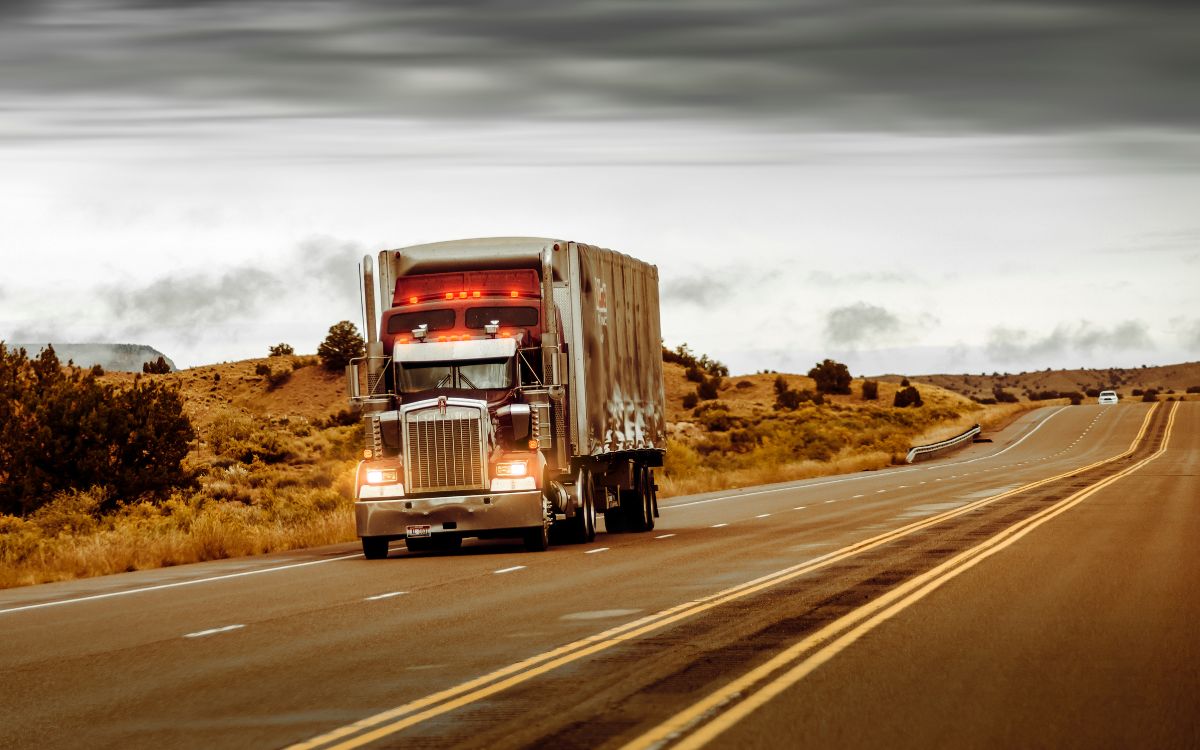
Mobile diesel services have a real impact on professional operations of every size. The impact shows up on big equipment, like commercial and heavy-duty vehicles run by larger fleets. It also shows up for the solo trucker grinding out miles between Dallas, Fort Worth, and points beyond.
Break down east of I-35E? Our Dallas mobile diesel mechanic comes to your truck 24/7, so you keep the load and skip the tow bill.
Many diesel drivers are part of smaller companies or working solo. That is the case for a large share of commercial truck drivers on America’s roads today. Some enjoy the freedom of self-employment, but it often means missing some of the perks the top fleets have. Or does it?
Here is why mobile diesel services are so valuable to owner-operators in the trucking industry, and why fleet managers in DFW are leaning on them too.

What Is a Mobile Diesel Mechanic?
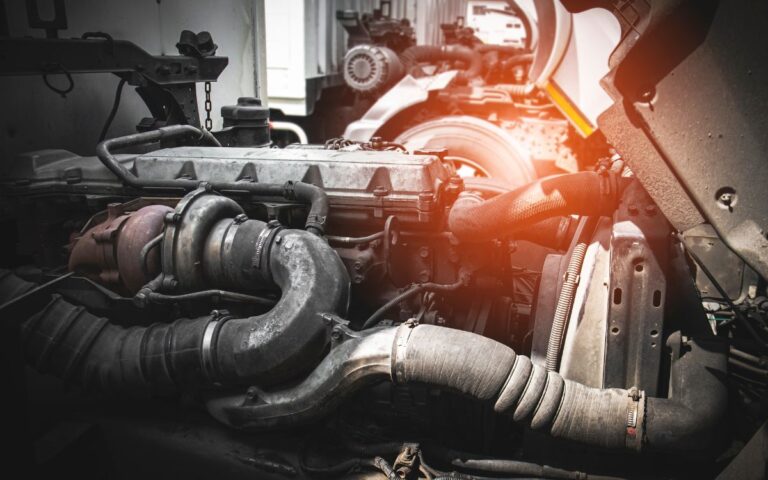
A mobile diesel mechanic is a certified diesel tech who brings the shop to your truck. The service truck carries diagnostic scan tools, common parts, fuel and air filters, batteries, jump starters, basic machining tools, and welding equipment. Most mobile units are built to handle 70 to 80 percent of common diesel repairs roadside, in the yard, or at a customer dock.
That last number matters. Industry data suggests roughly 70 to 80 percent of diesel breakdowns and PM jobs can be handled mobile, with no tow needed. The remaining 20 to 30 percent require shop infrastructure (alignment racks, frame straighteners, in-frame engine work). Knowing the difference saves you a tow bill.
What Is an Owner-Operator in the Diesel Industry?
In the trucking industry, an owner-operator is a truck driver who owns and runs their own trucking business. Rather than working as an employee for a trucking company, an owner-operator is self-employed and runs their own operation.
About half of today’s drivers work this way. As an owner-operator, you have the flexibility to choose your clients and contracts, decide which loads to haul, and pick the routes you take. That independence gives you more control over your schedule, earnings, and business decisions.
Owner-operators can work directly with shippers or freight brokers, or as subcontractors for larger trucking companies. Many specialize in specific freight, like refrigerated goods, flatbed, or hazmat, depending on their equipment and expertise.
The Challenges and Drawbacks of Self-Reliance
Being an owner-operator takes driving skills and business management chops. You handle bookkeeping, record-keeping, customer relations, and the financial side of the business. You also have to comply with industry regulations, including licenses, permits, and insurance.
The biggest challenge is cost management. The owner-operator typically pays for:
- Buying or leasing their own truck
- Maintenance costs
- Insurance premiums
- Fuel costs
- Emergency and repair expenses
The last point matters most for independent drivers. If you are responsible for your own repairs, you are responsible for your own safety on the road. There is no carrier dispatch or emergency service to call when something goes wrong on I-20 at 2 a.m.
Why Mobile Diesel Services Are Perfect for Independent Drivers
Drivers who work independently should be ready for anything. As a diesel driver in the freight industry, that means thinking through how to stay safe and handle an emergency.
Emergency assistance is the first and biggest benefit of mobile diesel services. When breakdowns or unexpected issues hit on the road, mobile diesel services get a tech to your truck fast and get you rolling.
A driver’s well-being is the top priority. With mobile services from Hawkeye Diesel Repair, you have backup along every leg of the haul. The benefits do not stop with safety.
Powering a Diesel Driver’s Trip
Owner-operators use mobile diesel services to stay efficient on the road. Mobile services bring fueling and maintenance to your location, so you skip the trip to a fuel station or repair shop.
Skipping those trips saves time you can spend driving or running the business. It is easier to focus on finding and serving customers when you are not stuck in a shop bay.
Other benefits of mobile diesel services include:
- Flexibility: Service comes to your truck stop, customer dock, or roadside, on your schedule.
- Reduced downtime: Minor repairs and refueling happen on-site, so you skip the trip to a shop.
- Cost savings: Avoid heavy-duty tow charges and the lost revenue of a stranded load.
- Direct service: One tech, one truck, one diagnosis. No service writer in the middle.
- More revenue miles: Less time in shop bays means more paid miles per week.
A mobile diesel service provider can act as a real partner for any independent driver. Think of us as the dispatch and service department of a traditional carrier, on-call for you. Now you get the best of both worlds.
What Mobile Can and Can’t Fix Roadside
Honest answer: most things, but not everything. Knowing the line up front saves time and tow money.
Mobile handles roadside or on-site:
- Jump starts, battery replacement, alternator and starter swaps
- Fuel system: filters, water separator, primer pump, lift pump
- Tire repair, replacement, and TPMS resets
- Air system: leaks, brake chamber, slack adjusters
- Lockouts and key extraction
- Sensor faults, ECM diagnostics, and DEF/DPF system codes
- DPF forced regen and SCR resets
- Hose, belt, and clamp replacement
- Coolant top-offs and minor leak repair
- DOT-required pre-trip inspections
- Trailer lights, electrical, and ABS faults
Tow to shop required for:
- In-frame engine overhauls and head gasket jobs
- Transmission rebuilds or replacements
- Frame straightening or major welding
- Wheel alignments and frame racks
- Engine block work or major casting failures
- Anything that requires a clean shop environment for proper completion
A good mobile diesel partner gives you that triage by phone before any equipment moves. That call alone often saves $1,000 or more in unnecessary tow charges.
A Fleet Manager’s Perspective on Mobile Diesel Repair
Mobile diesel repair is not just an owner-operator play. Fleet managers in DFW are running the same math, only with more zeros at the end. If you run five, fifty, or five hundred trucks, downtime is the line item that hurts most.
The True Cost of Diesel Truck Downtime
The American Transportation Research Institute (ATRI) puts the marginal cost of operating a Class 8 truck at roughly $2.27 per mile. The American Trucking Associations and FleetNet America/TMC data shows revenue loss between $450 and $750 per day per truck when one goes out of service. Penske, citing ATRI, puts the average revenue per truck at around $637 per day.
For a 1,000-truck fleet, downtime cost adds up to roughly $594,975 per year, per Penske’s analysis. For a single owner-operator, three days down can wipe out a month of net profit.
Add hard costs:
- Heavy-duty tow in DFW: $500 to $2,500 depending on distance and equipment
- Driver labor during downtime: $150 to $400 per day
- Rental truck or backup unit: $125 to $250 per day
- Total breakdown event cost (parts + labor + downtime + load recovery): $2,300 to $12,500
Most fleet managers think about parts and labor. The real expense is uptime.
Load Recovery: The Hidden Downtime Cost
When a truck goes out of service mid-haul, you don’t just lose that truck. You either dispatch a second truck and driver to recover the load, pay expedited freight to a backup carrier, eat detention fees at the shipper or receiver, or face a customer service penalty for missed delivery windows.
Load recovery is the cost most owner-operators and small fleets miss in their math. A $700 repair and a $1,500 tow can sit on top of a $2,000 load recovery charge before you even bill the customer for delay.
Mobile Dispatch vs. Tow-to-Shop Comparison
Use this table to triage the call.
| Factor | Mobile Dispatch | Tow to Shop |
| Best for | Roadside breakdowns, PM, sensor codes, electrical, fuel, tire, brake, DPF regen | Major mechanical failure, in-frame work, transmission, alignment, frame damage |
| Response time in DFW | 30 to 90 minutes typical | Tow + shop wait: half day to several days |
| Total cost (typical) | $150 to $1,500 per visit, no tow fee | $500 to $2,500 tow + shop labor + parts + downtime |
| Downtime impact | Hours, often same-day fix | Days, sometimes weeks |
| Parts availability | Common parts on truck; specialty parts ordered | Full shop inventory and OEM access |
| Weather risk | Limited by storms, extreme heat, hazmat zones | Climate-controlled bay, no weather constraint |
| Complexity ceiling | Up to roughly 70-80% of diesel repairs | Specialty equipment, lift access, frame rack |
| DOT/Hours of Service | Driver stays with truck; HOS preserved | Driver may need lodging, expedited rest |
ROI of Preventive Mobile Maintenance
Reactive repair is the most expensive way to run a fleet. Preventive maintenance done on-site at your yard, customer dock, or staging area shifts the math.
A typical preventive mobile service visit covers oil and filter changes, DEF top-offs, brake checks, fluid checks, tire pressure and tread, lights, air system, and DPF status. Cost per visit usually runs $150 to $500 per truck, depending on scope.
Skip those checks and a $300 fuel filter swap turns into a $4,500 injector job. A $200 brake pad service turns into a $2,000 brake drum and rotor replacement.
Industry data on PM ROI:
- Fleetio reports 300-500% ROI within 12 months for fleets running disciplined PM programs.
- 70% fewer roadside breakdowns and 30% lower repair costs versus reactive-only fleets.
- Fleets with mature PM programs see 20% fewer maintenance-related downtime days, per Penske research.
- FleetNet America and the Technology and Maintenance Council (TMC) data shows best-in-class fleets get 89% more miles between unscheduled repairs than the bottom quartile.
For most DFW fleets, the break-even on preventive mobile maintenance is one avoided roadside breakdown per truck per year. Most fleets see far more than that.
DOT Compliance and CSA Scores
Mobile PM is also a CSA score play. The Federal Motor Carrier Safety Administration (FMCSA) tracks fleet safety through Compliance, Safety, Accountability scores. Maintenance violations and out-of-service (OOS) findings during DOT inspections push your scores up. Higher scores trigger more inspections, higher insurance, and lost contracts with shippers who require sub-threshold scores.
Mobile preventive maintenance keeps brake adjustments, lighting, tire tread, and air system in spec, which is exactly what DOT inspectors check first. A few hundred dollars of mobile PM beats a $1,500 OOS violation and a CSA score hit.
Telematics-Triggered Mobile Dispatch
Modern fleets pair telematics with mobile diesel partners. ELD and engine data flag predictive faults (DPF approaching regen, low DEF, coolant temp creep, voltage drop) before the driver sees a warning light. The fleet manager dispatches a mobile tech to meet the truck at its next stop, often before a breakdown happens.
That’s the future of fleet uptime. Predictive dispatch instead of reactive recovery. If your telematics system is already running, ask us how to integrate alerts with our dispatch.
Mobile Diesel Services Hawkeye Provides in DFW
When you call on Hawkeye Diesel Repair, you get a full range of services dispatched to your location. Our mobile units cover:
- Emergency Roadside: Jump starts, lockouts, fuel delivery, tire change, on-scene diagnosis. See 24/7 roadside diesel repair.
- Preventive Maintenance: Scheduled oil, filter, fluid, brake, and DPF checks at your yard or stop.
- Diagnostics: ECM scans, sensor faults, DEF/DPF/SCR codes, common-rail pressure tests.
- Brake and Air System: Pad swap, slack adjusters, air leaks, ABS faults.
- Aftertreatment Service: DPF forced regen, EGR cleaning, SCR catalyst inspection, DEF top-off.
- Electrical: Alternator, starter, battery, wiring repair.
- Engine Repair: Diesel engine repair, fuel system, cooling system, turbo inspection.
- Tires and Wheel-End: Roadside tire change, hub seal, brake drum.
- DOT Inspections: Pre-trip, annual, and post-incident inspections meeting FMCSA requirements.
- Trailer Repair: Lights, ABS, landing gear, kingpin, suspension. See diesel truck repair for combined tractor-trailer service.
Frequently Asked Questions
How much does a mobile diesel mechanic cost in DFW?
Most mobile diesel calls in DFW run $150 to $1,500 per visit depending on scope. A simple roadside diagnostic and minor fix is on the low end. Major part replacements are higher. Hawkeye gives a price range on the dispatch call.
What services can a mobile diesel mechanic perform on-site?
Roughly 70 to 80 percent of diesel repairs, including diagnostics, fuel system, air brakes, electrical, batteries, tires, sensor codes, DPF regen, DEF top-off, and DOT inspections. Tow-to-shop is reserved for in-frame engine work, transmission rebuilds, and frame work.
When should I tow to a shop instead of calling mobile?
Tow if the truck has a major internal engine failure, drivetrain damage, transmission rebuild need, frame damage, or is unsafe to start. Otherwise, call mobile first for a phone triage.
Can a mobile diesel mechanic do a DOT inspection?
Yes. A qualified mobile diesel mechanic certified for FMCSA inspection requirements can perform pre-trip, annual, and post-incident DOT inspections at your location. Hawkeye handles all three.
How fast can Hawkeye dispatch in DFW?
Most calls in the metroplex see a tech on-site within 30 to 90 minutes. Heavy weather, rush hour, and rural calls (Weatherford, Denton edges) may run longer.
Is mobile diesel repair cheaper than a shop?
Often yes, when you count avoided tow charges, downtime, and load recovery. Shop labor rates can be lower per hour, but the total cost of getting a truck to and from a shop usually flips the math toward mobile for routine fixes.
What does fleet downtime cost per day?
Industry data puts the cost between $450 and $1,000 per day per Class 8 truck in lost revenue and labor, before tow and load recovery. Source: ATRI, ATA, FleetNet/TMC.
How does preventive maintenance pay for itself?
Disciplined PM programs return 300-500% ROI within 12 months according to Fleetio data, with roughly 70% fewer roadside breakdowns and 30% lower repair costs. The math usually works at one avoided breakdown per truck per year.
Call Hawkeye for Mobile Diesel Services Today
Diesel drivers keep the DFW economy moving, hauling freight and powering the heavy equipment behind every major project in the metroplex.
Owner-operators and fleets deserve a mobile diesel services partner who shows up and gets the job done. You work hard to keep this region running. Let us work hard to keep your truck running, like we have done for others.
Hawkeye Diesel Repair operates from our Mansfield shop at 6330 Dick Price Rd, with mobile units across Dallas, Fort Worth, Arlington, Denton, Weatherford, and the rest of DFW. Contact us today to connect with a partner you can trust on the road.